How it works
Their people send. We assemble. It arrives.
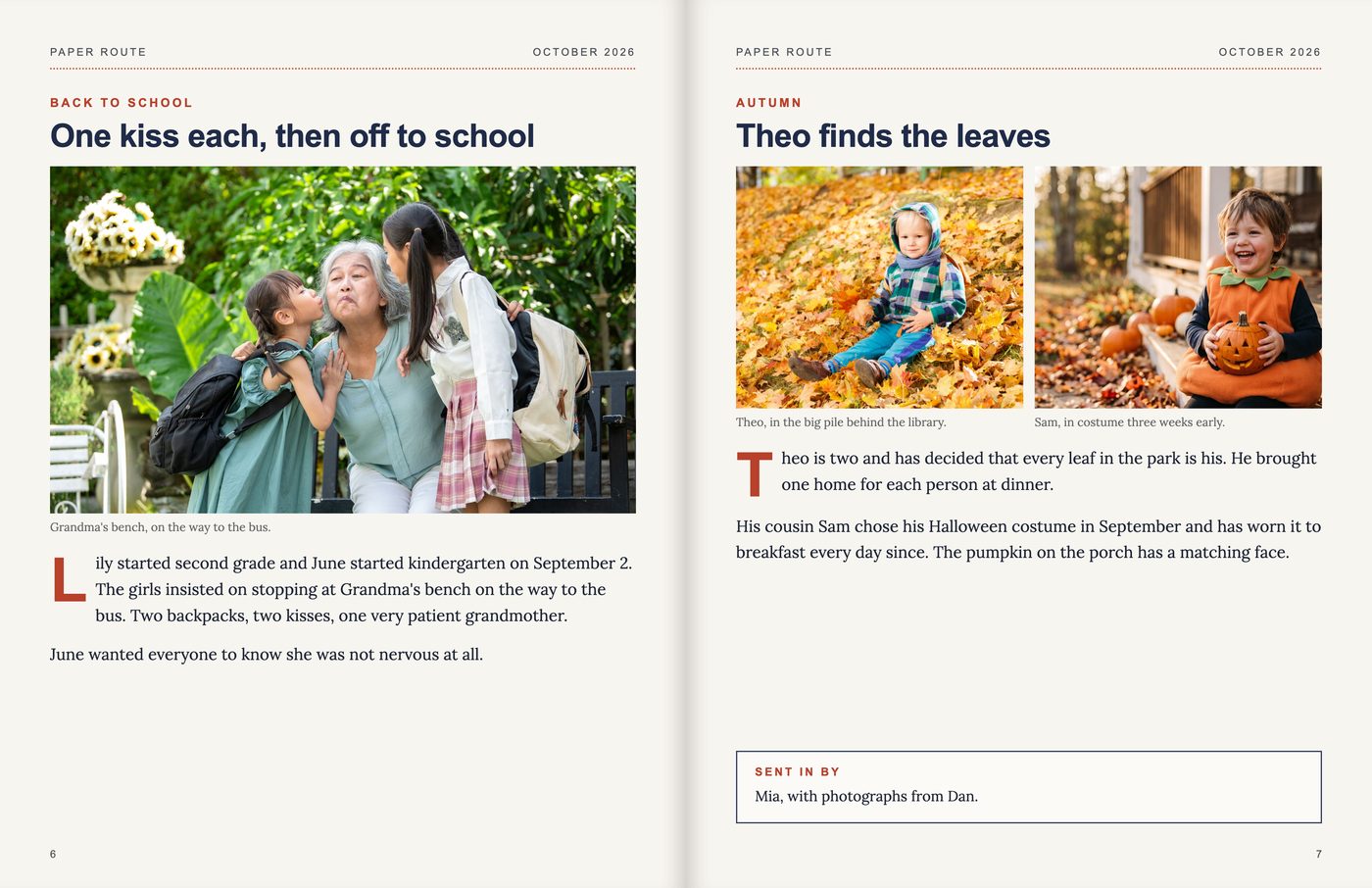
Once a month we collect from everyone who'd have posted it anyway: the kids, the grandkids, the sister in Minneapolis, the friend they still golf with on Thursdays. We write it up, lay it out, print it and mail it.
-
01
Family and friends send.
A photo, a few words, a voice note, a forwarded email.
-
02
We make the issue.
Twenty-four pages: their people, their interests, their hometown.
-
03
It arrives in the mail.
Printed and posted every month, with their name on the cover.
Ways to share
Send it however you already do.
-
By text
Reply to the text we send with a photo, a few words or a voice note. Nothing to download.
-
Voice notes
Say it instead of typing it. Send a voice note and we turn it into words for the page.
-
By email
Every magazine has its own address for contributions. Send photos and stories to it like any other email.
-
On the web
Add photos and stories at app.paper-route.com, from a phone or a computer.
-
From an AI assistant
If you use an assistant such as Claude, connect it to Paper Route and send a photo and its story straight from the conversation.
Where AI helps
Real moments from real people. Help with the rest.
Help with the words.
People send a photo and a few words; AI helps set them in the magazine's voice. It doesn't invent facts and it never guesses who's in a photograph. Names, dates and relationships come from you and from the person who sent the photo, and someone in the family proofs every issue before it prints.
Reading chosen for them.
The rest of the issue is written around what they follow: a team and the standings, the fishing report, the garden in October, news from their hometown. Results and standings come from a sports data feed; the news and hometown pages are written in plain sentences from what actually happened that month. These pages are never presented as something a person in their life did or said.
The standing sections
Their month, their people, their interests.
The month in photos.
What family and friends sent, printed large, a name under every face.
Back home.
One story each issue from the place they came from.
Whatever they follow.
Their team, the garden, the fishing report: whatever they'd have checked anyway.
The month ahead.
Birthdays, holidays and the games worth circling.
The object
Something to pick up, not something to open.
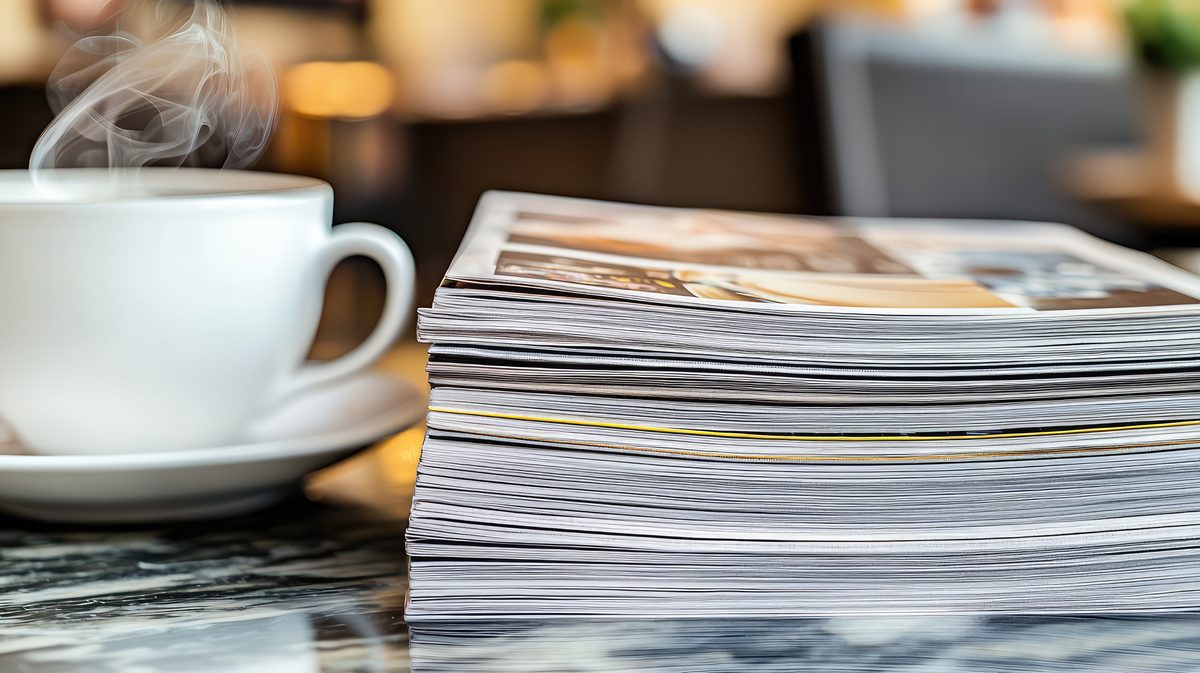
Twenty-four pages on matte paper, large type throughout, with a name on the cover. It stays on the table. It gets read twice, then handed to somebody else in the room. No notification ever told anyone to look at it.
Good stories deserve to be shared.
Make something personal. Make it last.